
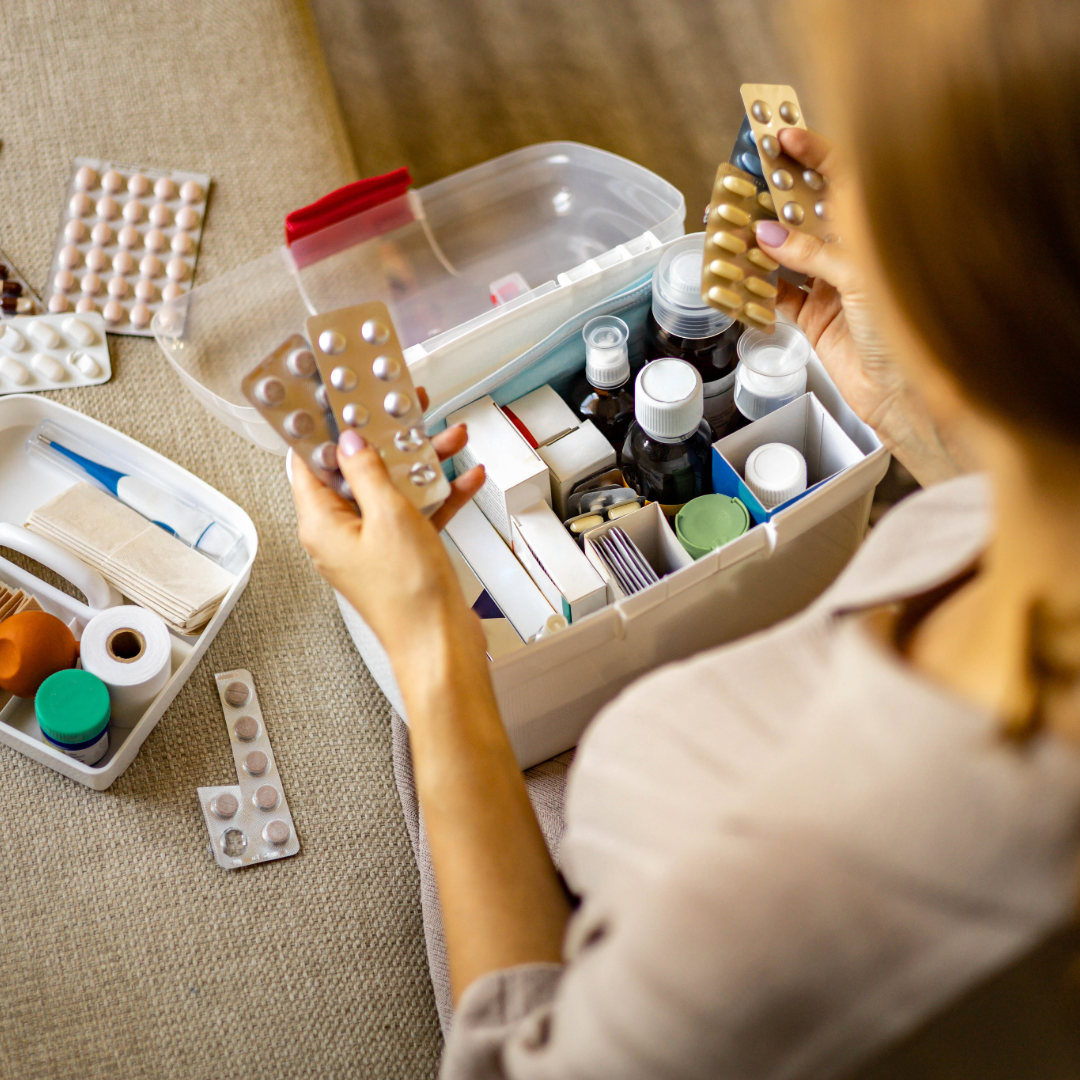
When someone at home suddenly develops a fever, an upset stomach, or a nasty cough, it quickly becomes clear what you have on hand — and what you don’t.
With so many products marketed as “essentials”, it’s easy to overbuy or miss what actually matters. A practical home medicine kit doesn’t need to be extensive — it just needs to be well considered.
We asked Kas from Day-Nite Pharmacy Northway what he believes is actually worth keeping at home.
Essentials for everyday use
A basic home medicine kit should include a few reliable items that can be used across common situations. These are typically the first line of support before further medical advice is needed:
- A pain and fever reliever (such as paracetamol or ibuprofen)
- An antihistamine for allergies or insect bites
- A cough or cold remedy suited to your household
- Oral rehydration solution for dehydration or stomach illness
- A thermometer
For minor injuries & skincare
For cuts, scrapes, and mild skin concerns. Keeping these items on hand helps you respond quickly and appropriately:
- Antiseptic solution or cream
- Plasters and sterile gauze
- A basic wound dressing
- A mild topical cream for bites, rashes, or irritation
For digestive discomfort
Digestive issues are common and often manageable at home. It’s important to use these correctly and seek advice if symptoms persist:
- An antacid for heartburn or reflux
- Medication for diarrhoea (when appropriate)
- A gentle laxative if needed
Household-specific needs
Each home is different. A pharmacist can help tailor recommendations based on your household. Your kit should reflect:
- Any chronic medications prescribed to family members
- Child-friendly formulations if you have young children
- Any known allergies or recurring conditions
A well-considered home medicine kit can make everyday health concerns easier to manage and reduce unnecessary stress. If you’re unsure what to include — or how to use any of these safely — it’s always worth speaking to your pharmacist.
Keep it safe and easy to access
Your home medicine kit should be stored in one clearly marked container or cupboard that is cool, dry and easy for adults to access when needed.
Avoid storing medicines in humid areas like bathrooms, and always keep them out of reach of children. It’s also worth checking expiry dates regularly and replacing items as needed.
“People often only realise what they need once someone at home is sick,” says Kas. “A simple, well-prepared medicine kit can make all the difference.”
If you’re unsure what to include — or how to use medicines safely — speak to your pharmacist for advice.